Economics Students and Readers:
This past week there were several great pitches on Dragon's Den as well as Shark Tank. Here are a few of the products:'
From CBC's Dragon's Den:
1. Dans Un Jardin (In a Garden)--Deteregent Dispenser. You pay $1.00 for a refillable bottle, and then refill it with detergent rather than waste plastic bottles. This isn't the pitch, and it is in French, but I think this is something that would be best installed in Apartment Complex and Dormitory Laundry Rooms. I'd actually use it since the Soap is Phosphate Free and the reusable bottles are better for the environment. One of the Dragons (Jim Treliving) nearly made a deal but then changed his mind.
2. Jitterbee Pancake Shaker. Frank here is doing something that has already been done by Bisquick and Aunt Jemima. However, those who've tried the product have said they taste better. Frank is a dad raising kids so I get why its been hard to promote the product. Again, this isn't the pitch, but would you consider trying this product?
3. Chillbed laptop cooling stand. I personally see this product as having been done a number of times before. I realize aluminum makes a good heat sink, but come on! It may be cheaper than those with fans or freon, but really, this product is too easily duplicated since nobody has nor can they get a patent on the metal Aluminum.
From ABC's Shark Tank:
1. Chord Buddy Guitar Learning Aid. Robert Herjavec went nuts for this one. It seems to be a good idea to me!
2. Tail Lightz. Lighted patches for your rear end. uh... NO!!
http://www.taillightz.com/As-Seen-on-Shark-Tank.html
3. You Smell Soap. This gal was shrewd and got a deal for her organic soaps and soap paper!!!
There were some good deals and some stinkers!
What are your thoughts?
Success to you all!!!
Prof. Hank Lewis
Monday, February 6, 2012


Wednesday, February 1, 2012
Small Players on a Big Stage: from CBC's DNTO
Students and Readers:
 Many of you are aware that I am an avid consumer of many different kinds of media, and in this blog, I am pulling from many sources to show economic relevance. One of my favourite radio shows that I listen to online or via podcast is called DNTO: Definitely Not the Opera on CBC radio. The show is mostly about sharing different stories from folks all over North America and the world, and is hosted by Sook-Yin Lee. The show can be funny, heartwarming, and sad; but it is also highly thought provoking and one that I do not miss.
In the most recent podcast Sook-Yin interviews several people that had very minor roles that ended up making a huge impact in many markets as well as the world. Some people who come up big economically in this week's show included:
J. David Armistead, an optometrist from Texas whose assisting musical artist Buddy Hollie created a definitive look that influenced other famous people from Malcom X to Drew Carrey.
Henrietta Lacks, whose not so well known contribution to medical science created the Biotechnology industry and have enhanced all of our healthcare. Her story is very timely and show a contribution that needs to be acknowledged far and wide by all of us.
 Jesse Heiman is the most prolific Movie and TV extra who is one of the most active working actors you've probably seen but never heard of.
Bill Fernandez, whose casual act of introducing two friends led to the creation of the most valuable electronics firms on the planet.
and
 Noam Galai whose crazy scream photo was used around the world on T-shirts, books, and graffiti. His photo blew up so huge, his face appeared on banners used in the Arab Spring Revolutions of 2011.
The podcast can be heard directly on the website or downloaded for free from iTunes. A link with pictures and other media can be found here. I advise you listen to the podcast and consider how such small actions could lead to much bigger things for markets. Especially in the case of what we call viral marketing.
Success to you all!!!
Prof. Lewis
 Many of you are aware that I am an avid consumer of many different kinds of media, and in this blog, I am pulling from many sources to show economic relevance. One of my favourite radio shows that I listen to online or via podcast is called DNTO: Definitely Not the Opera on CBC radio. The show is mostly about sharing different stories from folks all over North America and the world, and is hosted by Sook-Yin Lee. The show can be funny, heartwarming, and sad; but it is also highly thought provoking and one that I do not miss.
 In the most recent podcast Sook-Yin interviews several people that had very minor roles that ended up making a huge impact in many markets as well as the world. Some people who come up big economically in this week's show included:
J. David Armistead, an optometrist from Texas whose assisting musical artist Buddy Hollie created a definitive look that influenced other famous people from Malcom X to Drew Carrey.
Henrietta Lacks, whose not so well known contribution to medical science created the Biotechnology industry and have enhanced all of our healthcare. Her story is very timely and show a contribution that needs to be acknowledged far and wide by all of us.
Bill Fernandez, whose casual act of introducing two friends led to the creation of the most valuable electronics firms on the planet.
and
 Noam Galai whose crazy scream photo was used around the world on T-shirts, books, and graffiti. His photo blew up so huge, his face appeared on banners used in the Arab Spring Revolutions of 2011.
The podcast can be heard directly on the website or downloaded for free from iTunes. A link with pictures and other media can be found here. I advise you listen to the podcast and consider how such small actions could lead to much bigger things for markets. Especially in the case of what we call viral marketing.
Success to you all!!!
Prof. Lewis
Tuesday, January 31, 2012
In the news: US Cattle Herds at their lowest in 60 Years. Beef prices going up. More S & D analysis.
Per the article:
The Agriculture Department reported Friday there were about 91 million head of cattle in the U.S. on Jan. 1, down 2% from a year ago and the lowest level since 1952.
Retail beef prices, now near record levels, will likely rise 4% to 5% this year following a 10% increase in 2011, according to Agriculture. John Nalivka, owner of consulting firm Sterling Marketing, estimates prices could rise as much as another 10% — more than double the inflation rate for all food.
The most severe drought in more than half a century last year left ranchers in Texas, Oklahoma and other states with meager supplies of grass and water to feed their cattle. Many animals were sold to feedlots or slaughterhouses.
The crisis added to a long-term trend of ranchers thinning their herds because of the soaring price of corn — a primary feedstock for cattle — rising property costs and increased competition for land with corn, soybeans and other crops, says Kevin Good, a senior analyst at research firm CattleFax.
At the same time, U.S. beef exports jumped about 22% last year on surging demand from Canada, Japan, South Korea and Hong Kong, Agriculture says. Helping fuel the increase was a falling dollar that made U.S. shipments less expensive for foreign buyers. The combination of low supplies and strong foreign demand lifted cattle prices despite falling U.S. consumption, Nalivka says. Live cattle prices hit a record $1.26 a pound last week, up 20% the past year.
[Paul Davidson, USA TODAY]This particular article is very relevant to material being covered in ECON 2301 and ECON 2302 this week.
Questions for Comments: How does the cost of water affect the market for corn (curve, direction of movement, reason why, effects on P* and Q*)? How does this affect the market for Beef? (same modalities as HW #1 Pr. #5 for 2301, Pr. #4 for 2302). How does that affect the market for cheeseburgers served in restaurants? If possible, construct S & D graphs that illustrate this effect for each market.
Success to you all!!!
Prof. Lewis
Monday, January 30, 2012
In The News: Oil Prices and Effects on Market Supply and P* & *Q*
Just today there was a news article on recent prices of crude oil on Yahoo! news.
Per the article:
What is at work in this article are many of the factors influencing supply and demand for oil and for gasoline as well as heating oil.
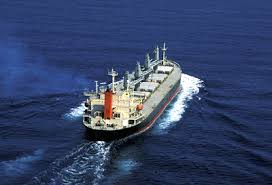 Crude oil is an example of a land resource-a natural resources that's not made from human hands. In recent readings and in class we've learned how a change in the cost of necessary resources can affect market supply. Additional political actions between embargoes by the European Union against Iran, US strategies trying to make it difficult for Iran to sell its oil on world markets and Iran possibly trying to block the passage of other countries' oil tankers through the Persian Gulf constitute supply-side sunspot activity.
Questions for comments: How do these disparate factors affect market supply for oil, as well as its equilibrium price and quantity?
Additionally, consumer spending has been said to be flat--as in not changing much recently. Households have kept a tight grip on their wallets, despite gradual increases in income levels. In recent readings and in class, we've learned about how income levels can affect the market demand for various goods and services. Certain goods/services are more sensitive to changes in income level than others.
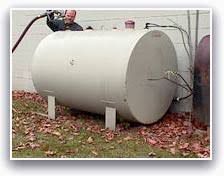 Questions for comments: Are gasoline and heating oil normal goods or inferior goods? What would be the expected response in demand for gasoline due to an increase in income levels of consumers? Are there any other non-price determinants of demand affecting the market? Which one is having the stronger effect on demand for gasoline and heating oil? Why is that the case?
To my students: I want you all to give careful consideration to this article, the material covered in class and how it affects these markets. Drawing graphs for S & D curves to illustrate it would be helpful. I will post an update to this article during the weekend with my responses, but I want to see NUMEROUS student comments on these questions first. This will help reinforce what you have been learning in your reading and in class meetings!
Success to you all!!!
Prof. Hank
Per the article:
Benchmark crude fell by 78 cents to finish at $98.78 per barrel in New York on Monday. Brent crude, which is used to price foreign oils that are imported by U.S. refineries, lost 71 cents to end at $110.75 per barrel in London.
The Commerce Department said Americans kept a tighter grip on their wallets in December. Consumer spending was flat, even though incomes rose by the most in nine months. The economy relies heavily on consumer spending, and analysts say the economic recovery could stall and energy demand may stay weak if spending doesn't pick up.
Meanwhile, Iran welcomed international weapons experts into the country in hopes of refuting claims that it is building a nuclear weapon. That eased concerns about possible military action in the region. Still, Europe plans to embargo Iranian oil this summer to pressure Iran about its nuclear program. If that happens, Iran says it could retaliate by blocking passage through the Persian Gulf, where tankers carry one-sixth of the world's oil exports.
The U.S. is ready to implement sanctions on Iran's central bank that will make it harder for Iran to sell oil.Gasoline pump prices rose by a penny on Monday to $3.43 per gallon, according to AAA, Wright Express and Oil Price Information Service. A gallon of regular is 15.3 cents higher than it was a month ago and 33 cents higher than it was last year. [[CHRIS KAHN, AP Energy Writer]
What is at work in this article are many of the factors influencing supply and demand for oil and for gasoline as well as heating oil.
Questions for comments: How do these disparate factors affect market supply for oil, as well as its equilibrium price and quantity?
Additionally, consumer spending has been said to be flat--as in not changing much recently. Households have kept a tight grip on their wallets, despite gradual increases in income levels. In recent readings and in class, we've learned about how income levels can affect the market demand for various goods and services. Certain goods/services are more sensitive to changes in income level than others.
To my students: I want you all to give careful consideration to this article, the material covered in class and how it affects these markets. Drawing graphs for S & D curves to illustrate it would be helpful. I will post an update to this article during the weekend with my responses, but I want to see NUMEROUS student comments on these questions first. This will help reinforce what you have been learning in your reading and in class meetings!
Success to you all!!!
Prof. Hank
Sunday, January 29, 2012
Economics Professor Approved Television: Dragon's Den and Shark Tank
Economics Students and Readers:
In the first week of class, we learn about the categories of Economic Resources--Land, Labor, Capital and Entrepreneurship. We define them, look at specific examples and explain how they are scarce. The TV shows Dragon's Den on the CBC in Canada and Shark Tank on ABC in the US/CTV in Canada feature Entrepreneurs that are self-made multimillionaires and billionaires who are engaging in Venture Capital Investment. Small entrepreneurs who have existing businesses or products go on these shows and make what we like to call an elevator pitch where they sell a portion of the equity in their firms in exchange for money to grow the firm and access to the Dragons'/Sharks' contacts and experience in order to help develop and grow their firms. Biographies of the Dragons and the Sharks can be found by clicking on the hotlinks in those words
Some of these small entrepreneurs ink deals with the Dragons/Sharks and end up growing and becoming very successful. Others refuse the deal but are still successful thanks in part to their exposure on Nationwide North American Television. Still Others offend the Dragons/Sharks and get rejected, and despite having a good product, end up failing. Finally, there are always a few entrepreneurs who come on the show that are sloppy, unprepared and get mocked out of the room.
Below is a video from Dragon's Den where the owners of EthicalOcean.com are making a pitch regarding their online marketplace for sweatshop free, econ-friendly products and we see Jim Treliving, Kevin O'Leary, Arlene Dickenson, W. Brett Wilson and Robert Herjavec debate the merits of such an investment.
Below is Dougie Luv, the owner/operator of Dougie Dogs making a pitch on Dragon's Den very recently. Jim Treliving, Kevin O'Leary, Arlene Dickenson, W. Brett Wilson and Bruce Croxon send him away since his Total Revenue aren't profitable enough. Jim Treliving is the majority owner of Bostons: The Gourmet Pizza in Canada, the US and Mexico, and his knowledge of profits needed base upon square feet of operating space is based on years of experience. Dougie is invited to come back once he hits minimum targets set by the Dragons.
Last but not least, Donny McCall the owner and developer of the Invis-A-Rack cargo management system for pickup trucks appeared on Shark Tank this past Friday, January 27, 2012. I can't post the video directly here, and he spoke with the Sharks at the very end. However here is the Link to the Full Episode on ABC.com. Note that Kevin O'Leary and Robert Herjavec are on both Dragon's Den and Shark Tank. Shark Tank also includes Daymond John (founder and CEO of FUBU), Barbara Corcoran (a real estate mogul) and Mark Cuban (Owner of the Dallas Mavericks and founder of a ton of various businesses and enterprises).
I hope those of you that are not entrepreneurs can appreciate just how much knowledge, creativity and inspiration it takes to be one of the Dragons/Sharks, as well as one of the entrepreneurs that goes on the show and makes their pitch. Also note: useful business and economics vocabulary appear in bold italic in these articles.
Success to you all!!!
Prof. Lewis
In the first week of class, we learn about the categories of Economic Resources--Land, Labor, Capital and Entrepreneurship. We define them, look at specific examples and explain how they are scarce. The TV shows Dragon's Den on the CBC in Canada and Shark Tank on ABC in the US/CTV in Canada feature Entrepreneurs that are self-made multimillionaires and billionaires who are engaging in Venture Capital Investment. Small entrepreneurs who have existing businesses or products go on these shows and make what we like to call an elevator pitch where they sell a portion of the equity in their firms in exchange for money to grow the firm and access to the Dragons'/Sharks' contacts and experience in order to help develop and grow their firms. Biographies of the Dragons and the Sharks can be found by clicking on the hotlinks in those words
Some of these small entrepreneurs ink deals with the Dragons/Sharks and end up growing and becoming very successful. Others refuse the deal but are still successful thanks in part to their exposure on Nationwide North American Television. Still Others offend the Dragons/Sharks and get rejected, and despite having a good product, end up failing. Finally, there are always a few entrepreneurs who come on the show that are sloppy, unprepared and get mocked out of the room.
Below is a video from Dragon's Den where the owners of EthicalOcean.com are making a pitch regarding their online marketplace for sweatshop free, econ-friendly products and we see Jim Treliving, Kevin O'Leary, Arlene Dickenson, W. Brett Wilson and Robert Herjavec debate the merits of such an investment.
Below is Dougie Luv, the owner/operator of Dougie Dogs making a pitch on Dragon's Den very recently. Jim Treliving, Kevin O'Leary, Arlene Dickenson, W. Brett Wilson and Bruce Croxon send him away since his Total Revenue aren't profitable enough. Jim Treliving is the majority owner of Bostons: The Gourmet Pizza in Canada, the US and Mexico, and his knowledge of profits needed base upon square feet of operating space is based on years of experience. Dougie is invited to come back once he hits minimum targets set by the Dragons.
Last but not least, Donny McCall the owner and developer of the Invis-A-Rack cargo management system for pickup trucks appeared on Shark Tank this past Friday, January 27, 2012. I can't post the video directly here, and he spoke with the Sharks at the very end. However here is the Link to the Full Episode on ABC.com. Note that Kevin O'Leary and Robert Herjavec are on both Dragon's Den and Shark Tank. Shark Tank also includes Daymond John (founder and CEO of FUBU), Barbara Corcoran (a real estate mogul) and Mark Cuban (Owner of the Dallas Mavericks and founder of a ton of various businesses and enterprises).
I hope those of you that are not entrepreneurs can appreciate just how much knowledge, creativity and inspiration it takes to be one of the Dragons/Sharks, as well as one of the entrepreneurs that goes on the show and makes their pitch. Also note: useful business and economics vocabulary appear in bold italic in these articles.
Success to you all!!!
Prof. Lewis
Wednesday, May 26, 2010
Potlucks Back In Fashion--a revisit to an old Church Practice brought about by the Great Recession
Recently someone on Twitter posted the followng statement:
"Back from another fun potluck. Apparently potlucks are back in fashion and very popular these days. Been to at least 4 in last 3 months!"
 I found this very interesting, because I remember Potlucks going on mostly at Churches back when I was a kid in the 1970s and 1980s. The idea was that there'd be a huge social gathering. People would bring a covered dish with some sort of vegetable, side dish, main dish, bread or dessert. People would sign up by category so there wouldn't be 10 desserts and no main dishes. And it was luck of the draw as far as what someone brought, or perhaps luck of the Pot!
The word pot-luck appears in 16th century England, in the work of Thomas Nashe, and was there used to mean "food provided for an unexpected or uninvited guest, the luck of the pot". The sense "communal meal, where guests bring their own food", appears to have originated in the late 19th century or early 20th century US, particularly in the Western United States, either by influence from potlatch or possibly by extension of traditional sense of "luck of the pot." Other variations include "covered dish supper" and "bring a plate."
Potluck dinners are often organized by religious or community groups, since they simplify the meal planning and distribute the costs among the participants. Smaller, more informal get-togethers with distributed food preparation may also be called potlucks. The only traditional rule is that each dish be large enough to be shared among a good portion (but not necessarily all) of the anticipated guests. In some cases each participant agrees ahead of time to bring a single course, and the result is a multi-course meal. Guests may bring in any form of food, ranging from the main course to desserts. In the United States, potlucks are associated with crockpot dishes, casseroles and jello salads.
 If any of you have ever read the book Stone Soup as a kid, it also illustrates the notion of a communal or collective meal.
I would like to challenge readers of this blog, friends, friends on FaceBook and Tweeps on Twitter who haven't done one of these types of meals to try to arrange it with a group of your friends or neighbors in your building or block, perhaps over the Memorial Day weekend or on a Sunday evening. Get to know your neighbors, or maybe invite some elderly people in your buiding or neighborhood and see what other kind of social or economic good this can create.
"Back from another fun potluck. Apparently potlucks are back in fashion and very popular these days. Been to at least 4 in last 3 months!"

The word pot-luck appears in 16th century England, in the work of Thomas Nashe, and was there used to mean "food provided for an unexpected or uninvited guest, the luck of the pot". The sense "communal meal, where guests bring their own food", appears to have originated in the late 19th century or early 20th century US, particularly in the Western United States, either by influence from potlatch or possibly by extension of traditional sense of "luck of the pot." Other variations include "covered dish supper" and "bring a plate."
Potluck dinners are often organized by religious or community groups, since they simplify the meal planning and distribute the costs among the participants. Smaller, more informal get-togethers with distributed food preparation may also be called potlucks. The only traditional rule is that each dish be large enough to be shared among a good portion (but not necessarily all) of the anticipated guests. In some cases each participant agrees ahead of time to bring a single course, and the result is a multi-course meal. Guests may bring in any form of food, ranging from the main course to desserts. In the United States, potlucks are associated with crockpot dishes, casseroles and jello salads.
 If any of you have ever read the book Stone Soup as a kid, it also illustrates the notion of a communal or collective meal.
 What is most interesting about this arrangement is that in the past 2 years, during the "Great Recession" as the media has dubbed it, we are seeing more groups outside of houses of worship engaging in potluck dinners, and in many ways, it's also helped build in a stronger sense of community, as well as help families save money on food. While the US and Canada aren't exactly socialist economies, one could argue this is a form of communal behaviour not exactly unlike socialism. However, I see it more like the actions of the Amish and the Hutterites--people who share a common community also sharing their food.
I know that in my extended family, potlucks aren't uncommon at all--especially at funerals and weddings. Often times rather than catering, each family would bring a dish or two to such an event and it would help make things easier on those in mourning or getting married. Despite the many hardships that the Great Recession has wrought on US and Canadian society, this type of building of community in houses of worship as well as in secular groups of people is a social good, as well as an economic service we can provide eachother.
Friday, January 1, 2010
Welcome to my Economics Blog!
Welcome Students and Readers!
I have created this blog in order to provide other media to my students, as well as serve the colleges where I am a Professor. If you navigate the blog, you will notice that in the sidebar, there are links to recent news of an economic nature, whether global, national, market, firm or consumer related. Those links change on an ongoing basis, so check back often to find new articles. There are also the most recent tweets from my ProfHankLewis Twitter account, which is used to post quick reminders and announcements for my current students.
The main articles in the blog will have relevance to current events in Macro- and Micro-economics, as well as my take on different news articles, television shows and current events of an economic nature. All opinions stated in this blog are my own and do not represent the opinions of Lone Star College, Houston Community College, The University of Phoenix, my students, family or friends.
Thoughtful input or rebuttal is appreciated via comments on each article. However those comments must be relevant to the subject of the article. Flames and spam will be deleted.
Last but not least, anytime there are certain vocabulary words that are relevant to business and economics, I am placing them in bold italic in the articles so they can be identified by the student as such. The reader can look those words up in an online dictionary, textbook or business guide themselves.
Thanks and I wish you all Success in your endeavours!
Prof. Hank Lewis, MS
Associate Professor of Economics
Lone Star College-University Park
Houston Community College System
The University of Phoenix
I have created this blog in order to provide other media to my students, as well as serve the colleges where I am a Professor. If you navigate the blog, you will notice that in the sidebar, there are links to recent news of an economic nature, whether global, national, market, firm or consumer related. Those links change on an ongoing basis, so check back often to find new articles. There are also the most recent tweets from my ProfHankLewis Twitter account, which is used to post quick reminders and announcements for my current students.
The main articles in the blog will have relevance to current events in Macro- and Micro-economics, as well as my take on different news articles, television shows and current events of an economic nature. All opinions stated in this blog are my own and do not represent the opinions of Lone Star College, Houston Community College, The University of Phoenix, my students, family or friends.
Thoughtful input or rebuttal is appreciated via comments on each article. However those comments must be relevant to the subject of the article. Flames and spam will be deleted.
Last but not least, anytime there are certain vocabulary words that are relevant to business and economics, I am placing them in bold italic in the articles so they can be identified by the student as such. The reader can look those words up in an online dictionary, textbook or business guide themselves.
Thanks and I wish you all Success in your endeavours!
Prof. Hank Lewis, MS
Associate Professor of Economics
Lone Star College-University Park
Houston Community College System
The University of Phoenix
Subscribe to:
Posts (Atom)