Showing posts with label Costs. Show all posts

Tuesday, September 3, 2013

In the News: Part Time Work May Be the New Normal for a while...

This posting is of major interest to ECON 2301 Students.  However, some ECON 2302 angles may show up as well.  As always, any articles I have analyzed in this blog are OFF LIMITS to my students for use in their Article Analysis papers due later in the semester.  

On September 2nd (Labor Day), USA Today published an article entitled "Is Part Time Work The New Normal?" The article details how it's not just folks in their 20s, but folks in their 30s and 40s who are juggling part time jobs, many a mix of professional and so-called McJobs (thank you Douglas Coupland, author of Generation X for coining that brilliant term) in order to make ends meet.  Some of this is the result of our slow, anemic recovery from our most recent recession in the business cycle, some of it may be due to other factors. Per the article, involuntary part-time workers — those who are seeking full-time work or holding multiple jobs — remain between 19% and 20% of the nation's workforce, up from 17% in 2007.

While some folks are happily saying we are almost fully recovered, the details are saying "not so fast!"  As the article stated very directly "Of the nearly 1 million new jobs created this year (2013), 80% or 800,000 of them are PART TIME positions."  This then begs the question:  if the jobs created are only part time jobs, then why is the unemployment rate going down?  Shouldn't it not go down as much if the jobs created are part time?  Actually, as usual, things are a lot more complex than they seem.

First of all, the way most countries measure their labor force is by head count, not by workers working 40 hours per week or annual salary paid jobs.  According to the US Dept. of Labor's standards, all that a person has to work is 20 paid hours in the 4 week period prior to the day of record (2nd Wednesday of the month) in order to be counted as a fully employed member of the Labor Force.  This goes against the way many managers measure employment--FTE or full-time-equivalent, which is 40 paid hours in a week.  Someone who works 5 hours a week is one-eighth of an FTE, not counted the same as a full timer.

Second, anyone who has not had paid hours recorded (this is measured by Social Security or Tax ID) during the 4 week period before the Day of Record, but has been filling out job applications (again, SSN/TID tracks this) is counted as an Unemployed member of the Labor Force.  Anyone who has neither had paid hours nor has been applying for work is not in the Labor Force at all.

The unemployment rate is simply a percentage calculated from the total number of unemployed Labor Force members, divided by the total Labor Force Members both employed and unemployed.  There is no distinction made for small hour part time labor, 1/2 time, 70%ers or Full Timers.  All labor force members who are being paid and having FICA taxes coming up under their SSNs are fully employed by the government's measuring stick.  The government does an annualized measure of the unemployment rate every month and produces the official reading for each calendar year.

Typically during recession in the business cycle--the part of the downturn that's below the secular trend line, where production and spending start to drag the trend down and involuntary (aka cyclical) unemployment is on the rise--part time jobs start to become more commonplace.  However during recovery in the business cycle--the part following recession and trough where spending and production are rising, but are still below the trend line--there is usually a gradual increase in full time employment.  Although spending and production have risen, the question is why haven't the number of Full Time positions risen along with them?  There are several factors at work that need to be examined:

1.  Recovery is NOT the same as Expansion
Too many Economics Textbooks have dumbed down the business cycle and lumped recovery and expansion phases together.  The reality is that recovery is still below the secular trend in the business cycle, while expansion is above the secular trend.  Recovery means you're trying to get back to the position on the trend line you were at production/spending wise before the recession.  Expansion is where real economic growth is happening.  The reality is that the US Economy has had a SLOW ANEMIC RECOVERY and we are not at or above the secular trend line at present.  It's possible pundits and politicians are in such a hurry to declare the recession over they are ignoring reality.  They need a reality check.

2.  Businesses are trying to Keep Costs Low
Many businesses had to find creative ways to reduce their operating costs in order to survive the most recent recession.  For most owners and operators of businesses, labor costs are the easiest cost to control.  For one, hourly wage labor is an example of a variable cost--costs directly tied to quantity of output produced by a firm.  When a firm sells more output, variable costs are higher, and when a firm sells less output as is the case during a recession, the firm's variable costs are lower.  Some of these costs are easily controlled, like electricity and water usage, which are used instantly.  Some, like materials used to make products, are more difficult to control as usually these are bought in bulk and are used gradually, rather than instantly.  Labor is neither instant nor gradually used, but falls somewhere in between.  If a burger joint's manager checks the sales in the register and sees the revenue the firm has earned for a shift has fallen below costs, they can't suddenly get the price per pound they paid for the beef in the freezer or the potatoes in the cooler reduced, but the manager can send 2 people home, cutting his labor cost for the shift by 6 worker hours or about $60.00 in total in the Houston area.

On a larger scale, there is a huge difference in costs between full time and part time workers, whether they are hourly wage or salaried workers.  Besides the paycheck differences, full time hourly wage workers who work 40 hours per week or more must be provided health insurance per federal law prior to Obamacare (see below).  However, in some states, the law is 20 to 25 hours.  Additionally, providing retirement savings, professional development training, disability insurance and other such benefits are common, even where not mandated by law.  In order to reduce the costs of employing workers, many companies reduced the hours of the majority of their staff to under 40 hours in order to cut the extra costs of benefits, the most expensive of which is Health Insurance.

3. Worker Attitudes are changing about Part Time Employment
Per the article:
"The number of jobs that need to be done by full-time employees continues to diminish," said Carl Camden, president and CEO of Kelly Services, a global temporary staffing agency, based in Troy, Mich. "Work has become more fragmented, and more people are willing to work in non-traditional environments." Since 2008, the percentage of people in the workforce regarding themselves as free agents has grown from 26% to more than 40%, according to a Kelly survey. Employees — especially Generation X workers in their 30s and 40s — want more freedom to set their own hours and create their own enterprises, and older workers — baby boomers in their 50s and 60s — are retiring slowly and taking on part-time jobs
I've heard it said by the Silent Generation (those born 1925 to 1945, my parents' generation) and some of the OLDER  Baby Boomers (Born 1946 to 1964, talking of those born in 1950s and earlier) that too many young people--Generation Xers (born 1965 to 1979, my generation) and Millenials (Born 1980 to 2000) have no sense of company loyalty and change jobs almost as fast as we change Facebook friends.  This is not entirely accurate, but there is good reason for this perception to prevail.  Look at the last 5 years, plus the first few years of the 1990s (when I completed my degree):

2007 to present feels A LOT like 1991 to 1995.  These were years of Recession, slow economic growth and limited opportunities.  During both these time frames you had people finishing advanced college and graduate degrees with very few job opportunities out there.  I personally knew 3 people who were doing everything they could in 1992 to get scholarships to earn another Master's Degree so they could work as a Teaching or Research Assistant since there was no demand for their degrees in the private sector.  I recently met a young Barista at Starbucks who changed his major from Accounting to Engineering because as a junior in college, he was not finding any internships, and friends who were graduating were finding no jobs out there for them.  However, he'd found there were lots and lots of jobs out there for engineers and he was having to extend his degree plan from 4 to 6 years in order to graduate with a degree that was employable.  It's kind of hard to do that midstream but the Economy and society change at an accelerated pace these days and those who don't adapt fast can get left far behind before they realize it.

I personally had 3 part time jobs between 1992 and 1994--weekdays banking, 2 evenings a week as an adjunct professor and weekend sales in a health food store.  I had to do these 3 jobs in order to pay rent, utilities, buy food and pay my car note & student loans.  I did not have the option of moving back to my parents' house because the economy where they lived was even worse than it was in Houston at that time and I had to stay where there were opportunities to get ahead.  After 2 years of that, I obtained a full time position in the bank, ditched the Health Food store sales job, but did not stop teaching Economics part time because I'd seen too many coworkers in banking lose their job over something trivial or due to cost cutting procedures by the bank.  I can also tell you for a fact that many of the faculty at HCC, Lone Star College, San Jacinto College, Wharton College, University of Phoenix, Devry and Strayer University are Adjunct Faculty (part time) at 2 or 3 other institutions of higher learning in the Houston area.  This is because these colleges, in order to keep costs and tuition down, hire mainly part time faculty.

Additionally, the amount of offshoring of skilled jobs like accounting, tech support and customer service to foreign countries like India, the Philippines and Taiwan has put degreed professionals in fear of their livelihood and has made them feel they have to keep looking for the next job while they are employed in their current job.  There's also the feeling that if the job that you do well can be easily replaced with a cheaper alternative over Skype, the company is not showing you any loyalty, so why should you show them what is not reciprocated?

Other workers want to give themselves flexibility by working multiple part time jobs instead of one full time job.  I personally know people that work a morning part time job and an evening part time job, but are off from 2 PM to 6 PM to pick up their kids from school and work with them on Homework, whereas a full time job of 8 to 4 or 9 to 5 doesn't offer this kind of flexibility. This also frees up their time to pursue other ventures.  I know a number of part time employees of restaurants, colleges, accounting firms and law firms who have side businesses they are developing.  There have been more than a few entrepreneurs who used their spare time to start businesses while working part time, making their own opportunities when job opportunities fail to show.

4. Obamacare is the Elephant in the Room
It is a favorite argument of some folks that the reason why Full Time jobs aren't making a comeback despite the recovery is due to Obamacare becoming law in the next couple of years.  The major provisions of the law:
  • Full time as defined by this law is 30 hours per week or more 
  • Those employers with at least 50 full time employees per that definition must provide “qualified” health coverage for all of their full-time employees
  • Those who don't must pay an annual penalty of $2,000 per full-time employee (after the first 30) if they don’t provide such coverage. If they do provide coverage but it’s not affordable, the penalty is $3,000 per employee who finds it unaffordable (with a cap at the penalty they’d pay for not offering coverage at all)
  • “Affordable” is defined as less than 9.5% of the employee’s family gross income
The penalty is assessed on a monthly basis. In other words, if an employee works 121 hours in a given calendar month, that 121st hour costs the employer $166.67 (one-twelfth of $2,000), in addition to the employee’s pay for that hour and the payroll tax on that amount. That’s a hefty charge, and it’s much more than the hourly rate typical for part-time employment in most industries.

  • If the employer decided to let the employees work more than 30 hours (and pay the penalty), the money to pay the penalty would have to come from somewhere. 
  • It could come from reduced profits, higher prices – or lower pay for workers. Many business run at very slim profit margins, so it’s unlikely that they could take the entire hit to their profit and stay in business. 
  • Business‘ ability to raise prices is limited by customers’ willingness to pay. Chances are, employees would have to absorb some of the penalty – perhaps most of it – in the form of lower wages.
  • For workers making at or near the minimum wage, there is even less flexibility. The wage cannot be reduced by federal or state law if the state minimum wage rate is higher than the federal, so the employer’s only option is the reduce work hours to avoid having to pay the penalty.
The easiest way for many businesses to avoid these penalties is to do what Hobby Lobby, Wal-mart, Restaurants and even some colleges have done:  reduce the majority of their staff's paid hours to 25 hours per week or less in order to avoid the penalties Obamacare would charge them for not providing health insurance to their employees who work in the 30 to 40 hour per week range.

The irony of all this is that the number of jobs created would increase, while the average workweek for employees would be reduced by 25 to 30%, along with the average paycheck for those employees.

However, defunding Obamacare or not enforcing it won't magically make full time jobs reappear.  
If you re-read my earlier statement, businesses have had to cut costs rigorously well before this oncoming federal law due to the state of the economy.

A Reality Check to All of us 
The reality is the only thing that will bring about growth in the number of full time jobs will be a combination of dropping production costs, rising sales of goods and services and an increase in the rate of real economic growth within the economy due to a real increase in production and sale of goods and services.  While our economy has experienced some growth during this recovery, the rate of growth has been slow.  Looking at the chart below, we had negative growth in real GDP for a few years, at one point as bad as 4.1% drop.  The recent 2 years had a growth rate that was much better, but the average rate of growth in GDP has been 1.00% for the past 5 years.  Usually for healthy growth, real GDP has to grow by 3% or more each year, and that's not what we've been having lately.  The past 3 years have basically offset the losses of the previous few, which means we've moved back to where we were when the recession was underway, but are nowhere near positive growth.

As always, any one of my students who makes a good, thorough, well-reasoned comment MIGHT earn an extra point on an upcoming test.  Non-students, I welcome similar comments from you.  Stick the the economics, check your politics at the door (especially the extreme Liberals and extreme Conservatives)!

Success to you all!!!

Professor Hank

Tuesday, June 12, 2012

In the News: Price of Beef and Cattle


File - In this July 28, 2011 file photo, a bull stands for inspection as auctioneer Keith Bexley looks for bids at the Lockhart Livestock Auction arena in Lockhart, Texas. This year, cowboys statewide watched closely, a recent auction in Frankston, Texas to see how the  cattle sold. The price of the heifers, the number of buyers, the amount of sales, and the attitude of the ranchers is one of the first real indications of how quickly Texas recovers from the impacts of a historic drought. Photo: Pat Sullivan / APAs a man who loves a good ol' char-grilled steak, the price of Beef and Cattle are of great interest to me.  As an Economics Professor, I also recognize the work of market economics in driving the price and availability of good steaks and beef.  Cattle are the resource that produces beef.  The cost of cattle drives the cost of beef and ultimately affects the price you pay for a steak in a steakhouse, a pot roast at a local grocery store or a burger at a local burger joint.  Texas is one of the largest producers of cattle and beef, and the markets for both of these have been affected by a number of factors.


In the Houston Chronicle, back in May of this year, it was stated that Cattle prices were rising as ranchers began rebuilding their herds.  2011 was a severe drought in Texas and much of the North American Midwest from Manitoba through the Dakotas, Nebraska, Texas and all the way down to Sonora and Chihuahua.  These are regions where a lot of agricultural products--especially grain and cattle--are produced in North America.  Per the article:
A quality cow that sold last year for no more than $1,800 now fetches about $3,000. The
average price for a bull is up $500. And a cow with a 300-pound to 400-pound calf by her side is selling for about $2,800, sometimes more than $3,000 — almost double the $1,700 they commanded two years ago. 
Last year's historic drought forced ranchers to cut their herds because they had no grass and couldn't afford high hay prices. Hundreds of thousands of cattle were slaughtered or sent out of the state, leaving Texas, the largest livestock producer in the nation, with its smallest herd since the 1950s.
All of these factors are pointing to shifts in Market Supply and/or Market Demand.  

Lets break this down one step at a time:

2011 Market for Beef
In 2011, there was a severe drought.  As a result of this, the cost of maintaining cattle being raised for beef went up since ranchers had to buy hay or grain, and pay more for water in order to raise cattle.  The end result was an increase in the slaughter of cattle, making the supply of beef (meat produced from cattle) increase.   This particular factor (the excessive, unexpected drought of 2011) is called Supply-side Sunspot activity.  The fact that weather is beyond the control of ranchers and that it affected their cost of maintaining cattle led to the thinning of the herd at that point in time.  (Consider: what does thinning of the herd do to the ranchers' operating costs AFTER their herds are thinned?) The Graph to the right shows that the equilibrium price of beef last year dropped due to the extra cattle slaughter, flooding the market with cheap ground beef, steaks and other prime cuts of meat--equilibrium quantity of Beef rose while equilibrium price of Beef dropped.

2012 Market for Live Cattle
Now fast forward one year.  During the past winter, we had plenty of rain, watering ponds on ranches filled up, the grass grew thick, lush and green again and now Ranchers are looking for cattle to restock their herds.      As a result we see the price of cattle increasing due to the Ranchers wanting and being able to buy more cattle to restock their herds.  (Consider:  which curve is moving for cattle?  Why is it making the price of cattle rise?)  Since many ranchers are considering this to be a better year and many are optimistic, they are buying up more cattle.  Ranchers are the buyers in the market for live cattle, and therefore this is a case of a shift in market Demand, caused by a change in consumers' expectations of the future.    The graph on the left illustrates how when market Demand increases with no change in Supply, equilibrium price and quantity increase.
Jason Cleere, a rancher and beef cattle specialist with Texas AgriLife Extension at Texas A&M University, believes that while ranchers are restocking, they remain cautious. The rains have slowed significantly in the past month, and many ranchers are heeding climatologists' warnings that the next decade in Texas will be relatively dry. They're keeping herds small so they're better prepared for the next, inevitable, dry spell. 

"Ranchers in general have been a little bit more conservative on going out and rebuilding because they want to see what happens as we move into the summer," Cleere said. "Ranchers went through a lot of cash reserves last summer, and they can't do that again this year." With cattle prices high, cash reserves low, the weather uncertain and calves taking nine months to be born and several years to be ready for slaughter, many estimate the beef industry may need five years to fully recover. 

It's a layered business. There are those who raise cattle for breeding. They sell to ranchers who raise cattle for beef and breed their herds to restock. Livestock dealers buy cattle from those ranchers and sell the animals to feedlots, where they are fattened up before heading to slaughterhouses.  The drought impacts each layer of the market differently.  
 Of course, what most of us who consume beef want to know is how will this affect the price of our favourite steaks, burgers, ribs and brisket?  And you students need to speculate on how each layer of the market as affected and how it ultimately plays out for the consumer of the final good.

Questions for the Comments Section:


1.  What does the increase in the price of cattle do the the costs of raising them to the ranchers who breed cattle?  The ranchers who raise cattle for beef?  The ranchers who raise cattle to produce milk/dairy products?


2.  How do these events affect Livestock dealers and the price of cattle sold to feedlots?  


3.  How do all of these things ultimately affect the price of a steak or a burger to the consumer?  


Remember:  Although both S & D curves may shift usually one shifts by a greater magnitude than the other, dominating the effect.  


Success to you all!!!

Prof. Hank Lewis

Thursday, June 7, 2012

Social Media: Consumer's Revenge or Tool of Extortion?

Students and Readers: As a Foodblogger running HankOnFood.com, I know many restaurants like to get good reviews and some will offer food discounts, free food, etc. if you give them some publicity.  If you read my food blog description, you will note I have a code of ethics I follow based on my Grandma's old adage "If you can't say something nice, then don't say anything at all!".  Even if I'm given a free meal or product, I don't write about it if I don't like it.  This is the only way I feel I can be fair and maintain my lack of bias.

In this day and age where everyone has multiple blogs, many consumers have found they can be great tools in dealing with poor customer service.  United Airlines, as an example, had luggage handlers mishandling guitars which led to musician David Carroll's guitar being broken into pieces.  See the video below as his response:


The fact of the matter is the World Wide Web has become a great sounding board for customers who have not been able to get satisfaction from large corporations wielding the word "policy" and shutting them down when they've been abused and given no end of disservice.  Much like a rumour mill or the town gossip, the Internet has enabled bad word of mouth to spread like wildfire on a global level, way beyond what was possible even 10 or 20 years ago.  This has also led to many libel suits over false claims, a faster spread of Urban Legends to the point that even Snopes can't keep up, and so on down the line.

However, what has become more and more common these days is a sense of entitlement and even arrogance in the use of Blogs, Facebook and other social media, and some individuals have decided to use them as a means to extort free products from companies and notably, free food and drink from restaurants.  One such individual had an issue with Ricky Craig, the owner of The Hubcap Grill  here in Houston and basically said that he'd give them a bad review on Yelp* if he wasn't given free product.  Ricky Craig would have none of it and went into a Twitter Battle with Yelp* and the customer over the issue.  He even took Yelp* to task over several false reviews, but Yelp* basically replied by saying they'd remove the reviews *if* he'd advertise with them.  Craig refused and retaliated in an event called #YuckFelp which I attended in a show of support for this local entrepreneur.  There have been several similar clashes between Craig and disgruntled customers over his not accepting credit cards due to how expensive the fees are and the fact that their kitchen won't cut a burger for the customer, but will give them a plastic knife to do it themselves.  The Anvil Bar and Refuge had a similar such dispute back in 2011 and owner Bobby Heugel took some liberties with a Yelp* sticker to voice his opinion.

And now we have another case of this that was reported on KIAH-39's NewsFix.


At it's best, the Internet and so-called New Media can be a source of income and a wealth of information that helps consumers and businesses alike.  At its worst, it is a source of misinformation that can clearly do serious harm to businesses that employ people who need those incomes and can even lead to scams/extortion such as these three examples here.

So let's hear from you.  Consider the following

1.  How likely are you to consider a review of a restaurant on Yelp*, Urban Spoon or a well known local Food Blogger in choosing a restaurant? 


2.  What would you need to know to consider if the reviews or opinions are valid or are just something petty?  Is there a litmus test we can use?


3.  Would you make use of YouTube, a blog, Twitter, or some other social media to get some sort of satisfaction if a business gave you poor service or if you felt they ripped you off?  How far would you be willing to take it?


4.  How much revenue could a firm lose due to these kinds of actions by customers?  How much would it cost the company to do damage control after the fact?  Would it be cheaper to just give in?  


As always, any well thought out and supported responses are welcome.

Success to you all!

Prof. Hank Lewis

Tuesday, April 3, 2012

Chat with Entrepreneur Brooksy Smith of Jerry Built Burgers

NOTE TO STUDENTS AND ECON BLOG READERS:


This is a mirror post of my other blog HankOnFood.com.  Since Entrepreneurship is a topic we discuss in ECON 2301 and 2302, I figured this chat with a local partner of Jerry Built Burgers might be interesting, and maybe make you hungry as well!


Affable Restaurateur, Brooksy Smith, One of the
5 Partners that own and operate Jerry Built Burgers 


Recently I was informed by Brooksy Smith of Jerry Built Burgers contacted me to inform me that their Woodland's location located at 1335 Lake Woodlands Dr. would be opening up on March 31st, just 6 weeks after their first location at 3501 Holcombe had opened.  Brooksy invited me to come out to the new location for a preview and to talk a bit about some of what he learned in the first 6 weeks of the Holcombe location being opened.  Since eating there when they first opened, Jerry Built has become part of my regular rotation of burger joints that my son and I enjoy.  And I'm always up to get the inside scoop on the restaurants I love, so I gladly accepted.

When my son Jason and I paid the visit, they were putting the finishing touches on their marquis sign and getting their last round of staff training done.  I was able to see their larger dining room (5500 vs. 4500 at their Holcombe location), and get a feel for some of the knowledge Brooksy Smith, Jerry & Chad Glauser and the rest of the gang had learned over the past 6 weeks.

Every Thursday it Gets Better


Blueberry Skinny Lemonade
A Dr. Oz Inspiration
This is something Brooksy said during our visit that I was very happy to hear.  I have made a few discreet visits to Jerry Built since their grand opening on Feb. 18th.  These have largely been late Friday night, Sunday brunch or weekend afternoons.  Every time I have come in, the Holcombe location has been busy, cranking out home grown burgers, hot dogs, fries and such.

In my experience, what usually gives a good local place like Jerry Built traction is a mixture of Word of Mouth and good press.  Jerry Built has gotten both, but thanks to social media, blogs and Twitter, the word of mouth has been a thousand fold.  There has also been a direct mail campaign where I've seen many a customer coming in with those black Jerry the Bull mailers to try a burger.  Every one of those customers has said they would be coming back.  I've also seen a fair number of Medical Students mixed with Rice University Students and Soccer Moms with full broods from West University Place.

Industrial bins and crinkler
at Jerry Built Burgers'
Woodlands location
Brooksy also dropped some good news about the parking situation at Holcombe:  he's getting ahold of some adjacent property and parking is going to increase TREMENDOUSLY by May.  This will be a relief for those of us that live closer to Holcombe, especially the lunch crowd that has passed the location by due to the full lot.

Brooksy also shared how they'd vastly underestimated the volume they'd be selling on their french fries.  They had to buy industrial-sized bins and an industrial-sized fry cutter.  These aren't the ones they use for restaurants;  they're the ones that Ore-ida and McCain's  potatoes use for making the stuff they freeze and sell to the public!  Brooksy was also good enough to admit that this was a nice problem to have in the restaurant business.

New Products and working up the learning curve


Customers have proven helpful to Brooksy and company on 2 levels:

Jason enjoying a Jerry Built dog
in front of blueberry skinny lemonade
and Ginger Bull Shake
One customer had noticed how the fries, which had been prepared properly, had turned mushy in the bag.  They made a few suggestions to Brooksy and some changes were made.  Specifically, a couple of the corners were cut out of the fry boxes, napkins no longer placed on top of them and bag tops no longer rolled shut.  This has kept the fries crisper and better tasting.

Another customer suggested a way to make sure day old Ginger-Bull cookies weren't wasted:  take yesterday's Ginger Bulls, crumble them up, mix them in a Vanilla shake and you now have their #1 shake at Holcombe:  The Ginger Bull shake.

Fried Egg Tomato Grilled Cheese
note the inverted bun!
Other Customers came up with an Ernie's Style Burger (with grilled onions in Ernie's sauce), a Grilled cheese sandwich with the buns inverted, and also a fried egg and tomato grilled cheese sandwich that my compatriot Michelle had while we sat and talked with Brooksy.

Dr. Oz also served as another inspirational source for a product.  Brooksy indicated that he'd heard Dr. Oz that blueberries are one of the superfoods we should all eat due to its antioxidant properties, and so he crushed them up and mixed them in with his fresh squeezed lemonade (regular or skinny, made with Splenda™).

I was given samples of the Ginger Bull Shake and the Blueberry skinny lemonade to try and I can say they are both very, very good and will probably have one of them the next time I swing by the Holcombe location.

Willing to Consider good ideas from Customers, within Reason


One of the main points I felt Brooksy made to me was that despite the challenges starting up a restaurant like this from scratch has been, he's been willing to listen to good ideas from customers that are within reason.  And if he's not able to go with an idea, request or suggestion, he's not ever going to say "I don't care."  He's going to explain the nature of the restaurant business and the considerations he has to make regarding food, cost and waste issues.  That's not something that a lot of restaurateurs would do, which goes to show as I've said before, Jerry Built Burgers is NOT just another burger joint.
Artwork inside the Woodlands location of Jerry Built

As an Economics Professor in my main life, I very much enjoyed a chance to talk about this business with one of the partners.  There were many insights I gained that I can use in my teaching and I was glad to get more info to share in the blog.

New Location in the Woodlands Opens March 31st


Saturday, March 31st, it opens.  It has the same great features of the Holcombe location:  the windows to watch the process, the in-house ground and crinkled fries, the in-house baked buns, the hand-jacuzzi washing station, but on a slightly larger scale.  I advise all my Northside Friends, Family Colleagues and Coworkers to pay them a visit at:
Same Jerry the Bull,
but Woodlands signage
restrictions make it a tad
smaller sign


1335 Lake Woodlands Dr.
The Woodlands, Texas 77380
281-367-2874

Sunday - Thursday 11:00AM – 9:00PM
Friday - Saturday 11:00AM – 10:00PM

Go there and

EAT HAPPY, Y'ALL!!!

Thursday, February 16, 2012

In the news: GM Records Biggest Profit Ever

The following post is more directed to my ECON 2302/Microeconomics Students:

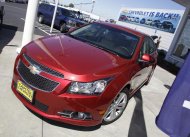
Recently on Yahoo News, the Associated Press reported record profits for General Motors.  This is just 2 years after it nearly fell apart due to financial difficulties.  General Motors went through major downsizing and had shuttered the Oldsmobile, Pontiac and Hummer makes during the past few years, closed plants, and went through a government sponsored bailout.

Per the article:


Strong sales in the U.S. and China helped the 103-year-old carmaker turn a profit of $7.6 billion, beating its old record of $6.7 billion in 1997 during the pickup truck and SUV boom.
GM is a vastly different company than it was back then. It's smaller, has less debt and its contract with the United Auto Workers is less costly. But it took a government bailout and a trip through bankruptcy protection in 2009 to cut its bloated costs. The company made record money last year even though U.S. auto sales were near historic lows at 12.8 million cars and trucks.
But problems surfaced in its 2011 results. GM lost $747 million before taxes in Europe, and its South American operations lost $122 million. Sales growth slowed in the U.S. in the fourth quarter, even as more Americans bought cars and trucks. Also, GM's fourth-quarter profit fell 8 percent and results missed Wall Street expectations.
This year, GM expects to increase its revenue as global auto sales grow and it charges more for models. However, it will make less money per vehicle as the mix of sales continues to shift to cars from trucks, which have bigger sticker prices. It also expects to invest $8 billion on new products and technology, and says pension expenses will rise. The company wants to keep expenses down by freezing its underfunded U.S. pension plan for salaried workers.  
Several Unit 2 concepts in Microeconomics are covered within this particular article and as we go through Unit 2 I would like you to add to the discussion in the comments.

Questions for Discussion:


1.  Under which of the four output market structures is the Automobile Industry?  How well does it fit the descriptions?  Consider all attributes: type of product, size of an individual firm relative to market, ease of entry/exit to the market, degree of price control an individual firm possesses, degree of non-price competition in the market.

2.  What type of costs are detailed in the news article (explicit or implicit, fixed or variable)?  Explain why these costs fit the description.

3.  What economic term could be used in the place of the phrase "money per vehicle"?  Explain why that is the appropriate term.

As always, any articles presented in the blog are NOT AVAILABLE for students to use for their semesterly article reports.

I welcome all thoughtful comments/discussion.

Success to you all!!!

Prof. Hank Lewis

Tuesday, January 31, 2012

In the news: US Cattle Herds at their lowest in 60 Years. Beef prices going up. More S & D analysis.

Just on KPRC-2 today and confirmed by media outlets such as USA Today, we see a Thinning of the US Cattle Herd.  As a man who loves a good cheeseburger or medium grilled steak, this is not good news.

Per the article:
The Agriculture Department reported Friday there were about 91 million head of cattle in the U.S. on Jan. 1, down 2% from a year ago and the lowest level since 1952.
Retail beef prices, now near record levels, will likely rise 4% to 5% this year following a 10% increase in 2011, according to Agriculture. John Nalivka, owner of consulting firm Sterling Marketing, estimates prices could rise as much as another 10% — more than double the inflation rate for all food. 
The most severe drought in more than half a century last year left ranchers in Texas, Oklahoma and other states with meager supplies of grass and water to feed their cattle. Many animals were sold to feedlots or slaughterhouses.
The crisis added to a long-term trend of ranchers thinning their herds because of the soaring price of corn — a primary feedstock for cattle — rising property costs and increased competition for land with corn, soybeans and other crops, says Kevin Good, a senior analyst at research firm CattleFax.
At the same time, U.S. beef exports jumped about 22% last year on surging demand from Canada, Japan, South Korea and Hong Kong, Agriculture says. Helping fuel the increase was a falling dollar that made U.S. shipments less expensive for foreign buyers. The combination of low supplies and strong foreign demand lifted cattle prices despite falling U.S. consumption, Nalivka says. Live cattle prices hit a record $1.26 a pound last week, up 20% the past year.
[Paul Davidson, USA TODAY]
This particular article is very relevant to material being covered in ECON 2301 and ECON 2302 this week.

Questions for Comments:  How does the cost of water affect the market for corn (curve, direction of movement, reason why, effects on P* and Q*)?  How does this affect the market for Beef?  (same modalities as HW #1 Pr. #5 for 2301, Pr. #4 for 2302).  How does that affect the market for cheeseburgers served in restaurants?  If possible, construct S & D graphs that illustrate this effect for each market.

Success to you all!!!

Prof. Lewis

Monday, January 30, 2012

In The News: Oil Prices and Effects on Market Supply and P* & *Q*

Just today there was a news article on recent prices of crude oil on Yahoo! news.

Per the article:
Benchmark crude fell by 78 cents to finish at $98.78 per barrel in New York on Monday. Brent crude, which is used to price foreign oils that are imported by U.S. refineries, lost 71 cents to end at $110.75 per barrel in London. 
The Commerce Department said Americans kept a tighter grip on their wallets in December. Consumer spending was flat, even though incomes rose by the most in nine months. The economy relies heavily on consumer spending, and analysts say the economic recovery could stall and energy demand may stay weak if spending doesn't pick up. 
Meanwhile, Iran welcomed international weapons experts into the country in hopes of refuting claims that it is building a nuclear weapon. That eased concerns about possible military action in the region. Still, Europe plans to embargo Iranian oil this summer to pressure Iran about its nuclear program. If that happens, Iran says it could retaliate by blocking passage through the Persian Gulf, where tankers carry one-sixth of the world's oil exports.
The U.S. is ready to implement sanctions on Iran's central bank that will make it harder for Iran to sell oil.
Gasoline pump prices rose by a penny on Monday to $3.43 per gallon, according to AAA, Wright Express and Oil Price Information Service. A gallon of regular is 15.3 cents higher than it was a month ago and 33 cents higher than it was last year. [
[CHRIS KAHN, AP Energy Writer]

What is at work in this article are many of the factors influencing supply and demand for oil and for gasoline as well as heating oil.

Crude oil is an example of a land resource-a natural resources that's not made from human hands.  In recent readings and in class we've learned how a change in the cost of necessary resources can affect market supply.  Additional political actions between embargoes by the European Union against Iran, US strategies trying to make it difficult for Iran to sell its oil on world markets and Iran possibly trying to block the passage of other countries' oil tankers through the Persian Gulf constitute supply-side sunspot activity.

Questions for comments:  How do these disparate factors affect market supply for oil, as well as its equilibrium price and quantity?

Additionally, consumer spending has been said to be flat--as in not changing much recently.  Households have kept a tight grip on their wallets, despite gradual increases in income levels.  In recent readings and in class, we've learned about how income levels can affect the market demand for various goods and services.  Certain goods/services are more sensitive to changes in income level than others.

Questions for comments: Are gasoline and heating oil normal goods or inferior goods?  What would be the expected response in demand for gasoline due to an increase in income levels of consumers?  Are there any other non-price determinants of demand affecting the market?  Which one is having the stronger effect on demand for gasoline and heating oil?  Why is that the case?

To my students:  I want you all to give careful consideration to this article, the material covered in class and how it affects these markets.  Drawing graphs for S & D curves to illustrate it would be helpful.  I will post an update to this article during the weekend with my responses, but I want to see NUMEROUS student comments on these questions first.  This will help reinforce what you have been learning in your reading and in class meetings!

Success to you all!!!

Prof. Hank

Sunday, January 29, 2012

Economics Professor Approved Television: Dragon's Den and Shark Tank

Economics Students and Readers:

In the first week of class, we learn about the categories of Economic Resources--Land, Labor, Capital and Entrepreneurship.  We define them, look at specific examples and explain how they are scarce.  The TV shows Dragon's Den on the CBC in Canada and Shark Tank on ABC in the US/CTV in Canada feature Entrepreneurs that are self-made multimillionaires and billionaires who are engaging in Venture Capital Investment.  Small entrepreneurs who have existing businesses or products go on these shows and make what we like to call an elevator pitch where they sell a portion of the equity in their firms in exchange for money to grow the firm and access to the Dragons'/Sharks' contacts and experience in order to help develop and grow their firms. Biographies of the Dragons and the Sharks can be found by clicking on the hotlinks in those words

Some of these small entrepreneurs ink deals with the Dragons/Sharks and end up growing and becoming very successful.  Others refuse the deal but are still successful thanks in part to their exposure on Nationwide North American Television.  Still Others offend the Dragons/Sharks and get rejected, and despite having a good product, end up failing.  Finally, there are always a few entrepreneurs who come on the show that are sloppy, unprepared and get mocked out of the room.

Below is a video from Dragon's Den where the owners of EthicalOcean.com are making a pitch regarding their online marketplace for sweatshop free, econ-friendly products and we see Jim Treliving, Kevin O'Leary, Arlene Dickenson, W. Brett Wilson and Robert Herjavec debate the merits of such an investment.


Below is Dougie Luv, the owner/operator of Dougie Dogs making a pitch on Dragon's Den very recently. Jim Treliving, Kevin O'Leary, Arlene Dickenson, W. Brett Wilson and Bruce Croxon send him away since his Total Revenue aren't profitable enough.   Jim Treliving is the majority owner of Bostons: The Gourmet Pizza in Canada, the US and Mexico, and his knowledge of profits needed base upon square feet of operating space is based on years of experience.  Dougie is invited to come back once he hits minimum targets set by the Dragons.


Last but not least, Donny McCall the owner and developer of the Invis-A-Rack cargo management system for pickup trucks appeared on Shark Tank this past Friday, January 27, 2012.  I can't post the video directly here, and he spoke with the Sharks at the very end.  However here is the Link to the Full Episode on ABC.com.  Note that Kevin O'Leary and Robert Herjavec are on both Dragon's Den and Shark Tank.  Shark Tank also includes Daymond John (founder and CEO of FUBU), Barbara Corcoran (a real estate mogul) and Mark Cuban (Owner of the Dallas Mavericks and founder of a ton of various businesses and enterprises).

I hope those of you that are not entrepreneurs can appreciate just how much knowledge, creativity and inspiration it takes to be one of the Dragons/Sharks, as well as one of the entrepreneurs that goes on the show and makes their pitch.  Also note: useful business and economics vocabulary appear in bold italic in these articles.

Success to you all!!!

Prof. Lewis