Showing posts with label Microeconomics. Show all posts

Tuesday, April 3, 2012

Chat with Entrepreneur Brooksy Smith of Jerry Built Burgers

NOTE TO STUDENTS AND ECON BLOG READERS:


This is a mirror post of my other blog HankOnFood.com.  Since Entrepreneurship is a topic we discuss in ECON 2301 and 2302, I figured this chat with a local partner of Jerry Built Burgers might be interesting, and maybe make you hungry as well!


Affable Restaurateur, Brooksy Smith, One of the
5 Partners that own and operate Jerry Built Burgers 


Recently I was informed by Brooksy Smith of Jerry Built Burgers contacted me to inform me that their Woodland's location located at 1335 Lake Woodlands Dr. would be opening up on March 31st, just 6 weeks after their first location at 3501 Holcombe had opened.  Brooksy invited me to come out to the new location for a preview and to talk a bit about some of what he learned in the first 6 weeks of the Holcombe location being opened.  Since eating there when they first opened, Jerry Built has become part of my regular rotation of burger joints that my son and I enjoy.  And I'm always up to get the inside scoop on the restaurants I love, so I gladly accepted.

When my son Jason and I paid the visit, they were putting the finishing touches on their marquis sign and getting their last round of staff training done.  I was able to see their larger dining room (5500 vs. 4500 at their Holcombe location), and get a feel for some of the knowledge Brooksy Smith, Jerry & Chad Glauser and the rest of the gang had learned over the past 6 weeks.

Every Thursday it Gets Better


Blueberry Skinny Lemonade
A Dr. Oz Inspiration
This is something Brooksy said during our visit that I was very happy to hear.  I have made a few discreet visits to Jerry Built since their grand opening on Feb. 18th.  These have largely been late Friday night, Sunday brunch or weekend afternoons.  Every time I have come in, the Holcombe location has been busy, cranking out home grown burgers, hot dogs, fries and such.

In my experience, what usually gives a good local place like Jerry Built traction is a mixture of Word of Mouth and good press.  Jerry Built has gotten both, but thanks to social media, blogs and Twitter, the word of mouth has been a thousand fold.  There has also been a direct mail campaign where I've seen many a customer coming in with those black Jerry the Bull mailers to try a burger.  Every one of those customers has said they would be coming back.  I've also seen a fair number of Medical Students mixed with Rice University Students and Soccer Moms with full broods from West University Place.

Industrial bins and crinkler
at Jerry Built Burgers'
Woodlands location
Brooksy also dropped some good news about the parking situation at Holcombe:  he's getting ahold of some adjacent property and parking is going to increase TREMENDOUSLY by May.  This will be a relief for those of us that live closer to Holcombe, especially the lunch crowd that has passed the location by due to the full lot.

Brooksy also shared how they'd vastly underestimated the volume they'd be selling on their french fries.  They had to buy industrial-sized bins and an industrial-sized fry cutter.  These aren't the ones they use for restaurants;  they're the ones that Ore-ida and McCain's  potatoes use for making the stuff they freeze and sell to the public!  Brooksy was also good enough to admit that this was a nice problem to have in the restaurant business.

New Products and working up the learning curve


Customers have proven helpful to Brooksy and company on 2 levels:

Jason enjoying a Jerry Built dog
in front of blueberry skinny lemonade
and Ginger Bull Shake
One customer had noticed how the fries, which had been prepared properly, had turned mushy in the bag.  They made a few suggestions to Brooksy and some changes were made.  Specifically, a couple of the corners were cut out of the fry boxes, napkins no longer placed on top of them and bag tops no longer rolled shut.  This has kept the fries crisper and better tasting.

Another customer suggested a way to make sure day old Ginger-Bull cookies weren't wasted:  take yesterday's Ginger Bulls, crumble them up, mix them in a Vanilla shake and you now have their #1 shake at Holcombe:  The Ginger Bull shake.

Fried Egg Tomato Grilled Cheese
note the inverted bun!
Other Customers came up with an Ernie's Style Burger (with grilled onions in Ernie's sauce), a Grilled cheese sandwich with the buns inverted, and also a fried egg and tomato grilled cheese sandwich that my compatriot Michelle had while we sat and talked with Brooksy.

Dr. Oz also served as another inspirational source for a product.  Brooksy indicated that he'd heard Dr. Oz that blueberries are one of the superfoods we should all eat due to its antioxidant properties, and so he crushed them up and mixed them in with his fresh squeezed lemonade (regular or skinny, made with Splenda™).

I was given samples of the Ginger Bull Shake and the Blueberry skinny lemonade to try and I can say they are both very, very good and will probably have one of them the next time I swing by the Holcombe location.

Willing to Consider good ideas from Customers, within Reason


One of the main points I felt Brooksy made to me was that despite the challenges starting up a restaurant like this from scratch has been, he's been willing to listen to good ideas from customers that are within reason.  And if he's not able to go with an idea, request or suggestion, he's not ever going to say "I don't care."  He's going to explain the nature of the restaurant business and the considerations he has to make regarding food, cost and waste issues.  That's not something that a lot of restaurateurs would do, which goes to show as I've said before, Jerry Built Burgers is NOT just another burger joint.
Artwork inside the Woodlands location of Jerry Built

As an Economics Professor in my main life, I very much enjoyed a chance to talk about this business with one of the partners.  There were many insights I gained that I can use in my teaching and I was glad to get more info to share in the blog.

New Location in the Woodlands Opens March 31st


Saturday, March 31st, it opens.  It has the same great features of the Holcombe location:  the windows to watch the process, the in-house ground and crinkled fries, the in-house baked buns, the hand-jacuzzi washing station, but on a slightly larger scale.  I advise all my Northside Friends, Family Colleagues and Coworkers to pay them a visit at:
Same Jerry the Bull,
but Woodlands signage
restrictions make it a tad
smaller sign


1335 Lake Woodlands Dr.
The Woodlands, Texas 77380
281-367-2874

Sunday - Thursday 11:00AM – 9:00PM
Friday - Saturday 11:00AM – 10:00PM

Go there and

EAT HAPPY, Y'ALL!!!

Wednesday, March 7, 2012

In the News: TV Networks ordering more Comedy Shows

This posting may be of more interest to my ECON 2302 (Microeconomics Students)

A recent article in USA Today stated that Television Networks over the air and cable are ordering more comedy shows than anything else for the Fall 2012 season.  There are a lot of different Microeconomic Modalities to this and it is worthwhile to my Microeconomics students to study this in some detail.

Per the article:
TV networks working on next season's new shows still are prepping plenty of CIA and FBI agents, hospital staffs and supernatural doings. But what they really want is comedy: 46 of them, a recent record, are vying for slots on the four major networks, all of which hope to increase the number of half-hour sitcoms they air next season.

It's no secret why networks are pining for laughs. Though almost every returning drama has lost viewers this season, eight comedies have posted ratings gains, led by CBS' The Big Bang Theory, up 21% in its fifth season, thanks partly to new exposure via syndicated reruns.

While ABC's Modern Family and The Middle are still growing, even long-in-the-tooth series such as CBS' How I Met Your Mother and Fox's American Dad, in their seventh seasons, are up over last year. So is Two and a Half Men, where Ashton Kutcher replaced Charlie Sheen in its ninth season.

CBS' 2 Broke Girls and Fox's New Girl are two of the season's top three newcomers among younger viewers. And most of fall's new comedies at least initially attracted decent ratings, while riskier dramas (The Playboy Club, Pan Am) flopped.

Network executives say the still-fragile economy and a fragmented, multitasking audience make comedies less demanding and more likely to break through, especially among the younger viewers that advertisers seek. "It's uplifting kind of comfort food for people right now," says NBC Entertainment president Jennifer Salke, who has ordered 14 comedy pilots for next season, more than any other network, while reducing new-drama contenders to eight.

It would be a good idea to read through this article thoroughly and consider the following questions as a form of Microeconomic Analysis:

1.  Under what output market structure do television broadcasters fit?  Be specific and go through all the major attributes of this.


2.  What kind of product/service are television shows?  Look at the different types of products addressed in the 4 different output market structures and their definitions and see which do they most fit.


3.  Consider the revenues and costs that TV networks earn and incur.  What is the main source of revenue to TV networks?  What determines the price they are able to charge to earn these revenues.  What are the major kinds of fixed and variable costs to a network?  


4.  Which market curve is shifting for TV comedy shows?  Why is that curve shifting?  (i.e. which non-price determinants are at work.)  

Please feel free to answer questions and post relevant comments in the comments section.

I hope all my students at Lone Star College and Houston Community College have a great Spring Break next week.

Thursday, February 16, 2012

In the news: GM Records Biggest Profit Ever

The following post is more directed to my ECON 2302/Microeconomics Students:

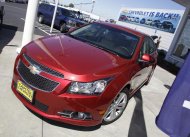
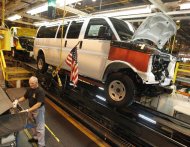
Recently on Yahoo News, the Associated Press reported record profits for General Motors.  This is just 2 years after it nearly fell apart due to financial difficulties.  General Motors went through major downsizing and had shuttered the Oldsmobile, Pontiac and Hummer makes during the past few years, closed plants, and went through a government sponsored bailout.

Per the article:


Strong sales in the U.S. and China helped the 103-year-old carmaker turn a profit of $7.6 billion, beating its old record of $6.7 billion in 1997 during the pickup truck and SUV boom.
GM is a vastly different company than it was back then. It's smaller, has less debt and its contract with the United Auto Workers is less costly. But it took a government bailout and a trip through bankruptcy protection in 2009 to cut its bloated costs. The company made record money last year even though U.S. auto sales were near historic lows at 12.8 million cars and trucks.
But problems surfaced in its 2011 results. GM lost $747 million before taxes in Europe, and its South American operations lost $122 million. Sales growth slowed in the U.S. in the fourth quarter, even as more Americans bought cars and trucks. Also, GM's fourth-quarter profit fell 8 percent and results missed Wall Street expectations.
This year, GM expects to increase its revenue as global auto sales grow and it charges more for models. However, it will make less money per vehicle as the mix of sales continues to shift to cars from trucks, which have bigger sticker prices. It also expects to invest $8 billion on new products and technology, and says pension expenses will rise. The company wants to keep expenses down by freezing its underfunded U.S. pension plan for salaried workers.  
Several Unit 2 concepts in Microeconomics are covered within this particular article and as we go through Unit 2 I would like you to add to the discussion in the comments.

Questions for Discussion:


1.  Under which of the four output market structures is the Automobile Industry?  How well does it fit the descriptions?  Consider all attributes: type of product, size of an individual firm relative to market, ease of entry/exit to the market, degree of price control an individual firm possesses, degree of non-price competition in the market.

2.  What type of costs are detailed in the news article (explicit or implicit, fixed or variable)?  Explain why these costs fit the description.

3.  What economic term could be used in the place of the phrase "money per vehicle"?  Explain why that is the appropriate term.

As always, any articles presented in the blog are NOT AVAILABLE for students to use for their semesterly article reports.

I welcome all thoughtful comments/discussion.

Success to you all!!!

Prof. Hank Lewis