Thursday, April 5, 2012

Jobloft blows a done deal on Dragon's Den thanks to big mouthed Professor

As many of you know, I enjoy Dragon's Den and Shark Tank as these shows feature successful entrepreneurs as Venture Capitalists helping smaller entrepreneurs with big ideas but need funds to expand or take it to the next level.  Last night on the CBC, they did a reflection of the past several seasons regarding the most memorable moments on the show.  These moments included times when those making their elevator pitch broke down in tears at Kevin O'Leary's caustic response to ridiculous valuations, funny moments when the Dragon's clowned around, times when pitchers used scantily clad men or women to pursuade the Dragons, and even a time when a Food Pitcher served up a dish to the Dragon's that was revealed to be Dog Food!!!

However the most memorable moment came from the first season when the founders of JobLoft.com, an internet job site that would alert job seekers in service businesses such as restaurants, hospitality and retail stores, who was hiring in what areas via Text and enable faster application filing for those in those industries.


Jim Treliving, Franchise Baron of Boston Pizza and Mister Lube  was very interested, as were the other Dragons.  A deal was done--first deal closed of the first season.  However, at the closing, the founders of Jobloft (a group of University students) brought their mentor, a business professor, along for the signing of the deal and the cheque being issues.  However, that business professor (a bigger blowhard than I am) ruined things:


Suffice it to say, the Professor's behavior is very disappointing on many levels.  For one, the student entrepreneurs had made a successful elevator pitch and had a done deal, cheque written etc.  Although I am sure the Professor had good intentions, if he had ANY business sense AT ALL, he would have voiced his feelings about the deal PRIVATELY with those students he was mentoring and not done any grandstanding at the closing.

As someone who would be very pleased to help mentor students that are serious about becoming entrepreneurs or advancing into a career in business, and as someone who spent more than 16 years of his life in the Financial Services realm prior to teaching college & university students, I would consider it my role to advise anyone I was mentoring at appropriate moments and then step back and allow them to do what they felt best, including reject some or all of the advice I provide, and reap the benefits, or suffer the consequences.  That closing was Jobloft's moment to enjoy and their mentor should have just said "Congratulations" and been happy for them, rather than shoot his mouth off.  If I'd been in his shoes, I'd have  kept any ruminations about it to myself during the closing and would have been more jazzed to meet some of the Dragons.

Future participants on Dragon's Den learned a valuable lesson at Jobloft's expense:  BE  VERY CAREFUL who you invite to the closing of the deal.

Until next time,

Professor Hank Lewis

Tuesday, April 3, 2012

Chat with Entrepreneur Brooksy Smith of Jerry Built Burgers

NOTE TO STUDENTS AND ECON BLOG READERS:


This is a mirror post of my other blog HankOnFood.com.  Since Entrepreneurship is a topic we discuss in ECON 2301 and 2302, I figured this chat with a local partner of Jerry Built Burgers might be interesting, and maybe make you hungry as well!


Affable Restaurateur, Brooksy Smith, One of the
5 Partners that own and operate Jerry Built Burgers 


Recently I was informed by Brooksy Smith of Jerry Built Burgers contacted me to inform me that their Woodland's location located at 1335 Lake Woodlands Dr. would be opening up on March 31st, just 6 weeks after their first location at 3501 Holcombe had opened.  Brooksy invited me to come out to the new location for a preview and to talk a bit about some of what he learned in the first 6 weeks of the Holcombe location being opened.  Since eating there when they first opened, Jerry Built has become part of my regular rotation of burger joints that my son and I enjoy.  And I'm always up to get the inside scoop on the restaurants I love, so I gladly accepted.

When my son Jason and I paid the visit, they were putting the finishing touches on their marquis sign and getting their last round of staff training done.  I was able to see their larger dining room (5500 vs. 4500 at their Holcombe location), and get a feel for some of the knowledge Brooksy Smith, Jerry & Chad Glauser and the rest of the gang had learned over the past 6 weeks.

Every Thursday it Gets Better


Blueberry Skinny Lemonade
A Dr. Oz Inspiration
This is something Brooksy said during our visit that I was very happy to hear.  I have made a few discreet visits to Jerry Built since their grand opening on Feb. 18th.  These have largely been late Friday night, Sunday brunch or weekend afternoons.  Every time I have come in, the Holcombe location has been busy, cranking out home grown burgers, hot dogs, fries and such.

In my experience, what usually gives a good local place like Jerry Built traction is a mixture of Word of Mouth and good press.  Jerry Built has gotten both, but thanks to social media, blogs and Twitter, the word of mouth has been a thousand fold.  There has also been a direct mail campaign where I've seen many a customer coming in with those black Jerry the Bull mailers to try a burger.  Every one of those customers has said they would be coming back.  I've also seen a fair number of Medical Students mixed with Rice University Students and Soccer Moms with full broods from West University Place.

Industrial bins and crinkler
at Jerry Built Burgers'
Woodlands location
Brooksy also dropped some good news about the parking situation at Holcombe:  he's getting ahold of some adjacent property and parking is going to increase TREMENDOUSLY by May.  This will be a relief for those of us that live closer to Holcombe, especially the lunch crowd that has passed the location by due to the full lot.

Brooksy also shared how they'd vastly underestimated the volume they'd be selling on their french fries.  They had to buy industrial-sized bins and an industrial-sized fry cutter.  These aren't the ones they use for restaurants;  they're the ones that Ore-ida and McCain's  potatoes use for making the stuff they freeze and sell to the public!  Brooksy was also good enough to admit that this was a nice problem to have in the restaurant business.

New Products and working up the learning curve


Customers have proven helpful to Brooksy and company on 2 levels:

Jason enjoying a Jerry Built dog
in front of blueberry skinny lemonade
and Ginger Bull Shake
One customer had noticed how the fries, which had been prepared properly, had turned mushy in the bag.  They made a few suggestions to Brooksy and some changes were made.  Specifically, a couple of the corners were cut out of the fry boxes, napkins no longer placed on top of them and bag tops no longer rolled shut.  This has kept the fries crisper and better tasting.

Another customer suggested a way to make sure day old Ginger-Bull cookies weren't wasted:  take yesterday's Ginger Bulls, crumble them up, mix them in a Vanilla shake and you now have their #1 shake at Holcombe:  The Ginger Bull shake.

Fried Egg Tomato Grilled Cheese
note the inverted bun!
Other Customers came up with an Ernie's Style Burger (with grilled onions in Ernie's sauce), a Grilled cheese sandwich with the buns inverted, and also a fried egg and tomato grilled cheese sandwich that my compatriot Michelle had while we sat and talked with Brooksy.

Dr. Oz also served as another inspirational source for a product.  Brooksy indicated that he'd heard Dr. Oz that blueberries are one of the superfoods we should all eat due to its antioxidant properties, and so he crushed them up and mixed them in with his fresh squeezed lemonade (regular or skinny, made with Splenda™).

I was given samples of the Ginger Bull Shake and the Blueberry skinny lemonade to try and I can say they are both very, very good and will probably have one of them the next time I swing by the Holcombe location.

Willing to Consider good ideas from Customers, within Reason


One of the main points I felt Brooksy made to me was that despite the challenges starting up a restaurant like this from scratch has been, he's been willing to listen to good ideas from customers that are within reason.  And if he's not able to go with an idea, request or suggestion, he's not ever going to say "I don't care."  He's going to explain the nature of the restaurant business and the considerations he has to make regarding food, cost and waste issues.  That's not something that a lot of restaurateurs would do, which goes to show as I've said before, Jerry Built Burgers is NOT just another burger joint.
Artwork inside the Woodlands location of Jerry Built

As an Economics Professor in my main life, I very much enjoyed a chance to talk about this business with one of the partners.  There were many insights I gained that I can use in my teaching and I was glad to get more info to share in the blog.

New Location in the Woodlands Opens March 31st


Saturday, March 31st, it opens.  It has the same great features of the Holcombe location:  the windows to watch the process, the in-house ground and crinkled fries, the in-house baked buns, the hand-jacuzzi washing station, but on a slightly larger scale.  I advise all my Northside Friends, Family Colleagues and Coworkers to pay them a visit at:
Same Jerry the Bull,
but Woodlands signage
restrictions make it a tad
smaller sign


1335 Lake Woodlands Dr.
The Woodlands, Texas 77380
281-367-2874

Sunday - Thursday 11:00AM – 9:00PM
Friday - Saturday 11:00AM – 10:00PM

Go there and

EAT HAPPY, Y'ALL!!!

Wednesday, March 7, 2012

In the News: TV Networks ordering more Comedy Shows

This posting may be of more interest to my ECON 2302 (Microeconomics Students)

A recent article in USA Today stated that Television Networks over the air and cable are ordering more comedy shows than anything else for the Fall 2012 season.  There are a lot of different Microeconomic Modalities to this and it is worthwhile to my Microeconomics students to study this in some detail.

Per the article:
TV networks working on next season's new shows still are prepping plenty of CIA and FBI agents, hospital staffs and supernatural doings. But what they really want is comedy: 46 of them, a recent record, are vying for slots on the four major networks, all of which hope to increase the number of half-hour sitcoms they air next season.

It's no secret why networks are pining for laughs. Though almost every returning drama has lost viewers this season, eight comedies have posted ratings gains, led by CBS' The Big Bang Theory, up 21% in its fifth season, thanks partly to new exposure via syndicated reruns.

While ABC's Modern Family and The Middle are still growing, even long-in-the-tooth series such as CBS' How I Met Your Mother and Fox's American Dad, in their seventh seasons, are up over last year. So is Two and a Half Men, where Ashton Kutcher replaced Charlie Sheen in its ninth season.

CBS' 2 Broke Girls and Fox's New Girl are two of the season's top three newcomers among younger viewers. And most of fall's new comedies at least initially attracted decent ratings, while riskier dramas (The Playboy Club, Pan Am) flopped.

Network executives say the still-fragile economy and a fragmented, multitasking audience make comedies less demanding and more likely to break through, especially among the younger viewers that advertisers seek. "It's uplifting kind of comfort food for people right now," says NBC Entertainment president Jennifer Salke, who has ordered 14 comedy pilots for next season, more than any other network, while reducing new-drama contenders to eight.

It would be a good idea to read through this article thoroughly and consider the following questions as a form of Microeconomic Analysis:

1.  Under what output market structure do television broadcasters fit?  Be specific and go through all the major attributes of this.


2.  What kind of product/service are television shows?  Look at the different types of products addressed in the 4 different output market structures and their definitions and see which do they most fit.


3.  Consider the revenues and costs that TV networks earn and incur.  What is the main source of revenue to TV networks?  What determines the price they are able to charge to earn these revenues.  What are the major kinds of fixed and variable costs to a network?  


4.  Which market curve is shifting for TV comedy shows?  Why is that curve shifting?  (i.e. which non-price determinants are at work.)  

Please feel free to answer questions and post relevant comments in the comments section.

I hope all my students at Lone Star College and Houston Community College have a great Spring Break next week.

Tuesday, February 28, 2012

All About Convenience Stores--DNTO from Feb 25, 2012

This posting will be of interest to all readers and students

Convenience stores are a particular type of business that all of us have various familiarity with.  They're where we stop for a quick bottle of Dr. Pepper, gas up our cars, grab a quick cup of bad coffee or lottery tickets.  As a kid my local Stop N Go was where all the kids would go after school to get a Slushie, buy a candy bar, play Asteroids or Defender, and it was a neighborhood hub for various casual social activities.

They've played an important role in Generation X Icon Kevin Smith's movies--specifically Clerks.  Where the two local Dope Dealers, Jay and Silent Bob, hang outside causing trouble for long-suffering employee Dante "I WASN'T EVEN SUPPOSED TO BE HERE TODAY!!!" Hicks and his cohort Randall Graves.  Thanks to this movie, the Quick-stop in Red Bank, New Jersey, has become a place visited by fans of Smith for years.

Definitely Not the OperaOn this past week's DNTO, Guest Host Rosanna Deerchild speaks with several interesting people who offer their own perspectives. One entrepreneur who caught my attention was Howard Mullins, the inventor of a device called The Mosquito.  This device takes advantage of a hearing range that kids and teenagers have, but adults don't, and is used by convenience stores to make rowdy teenagers hanging out in front of conveniences leave if they won't behave live civilized people.  What I found interesting was a lot of teenagers have downloaded its sound as a ringtone so they know if they have a text in class but so teachers won't realize it since Adults can't hear it.  :Shaking My Head:

Another person who's perspective was worth listening to was Ins Choi--a Canadian of Korean Ancestry who wrote the play "Kim's Convenience." It deals with how in Canada (and in the United States for that matter) many immigrant families start convenience stores as a way to make a living, giving them a chance at a slice of the North American Dream. However it also deals with the fact that their US and Canadian born children who are acculturated to their countries of birth, move on to university educations and do other things, many of them not wanting to continue to operate or own the family business. This play is a story of culture, of entrepreneurship and of cultural shifts from immigrants to their native born children. This story would give a unique perspective to those of us who are customers of immigrant-run and owned convenience stores that we don't always know or realize.  And included music that played on the live show, an Indo-British band called Cornershop (how many Brits refer to Convenience stores) singing a song about a Bollywood star and how lovers date in secret violating Caste conventions in "Brimful of Asha"


A Brief History of the Convenience Store (from the NACS website)

Convenience stores evolved from a variety of sources early in the twentieth century. They drew upon characteristics of many types of retail establishments in existence at the time: the "mom-and-pop" neighborhood grocery store, the "ice-house" (from pre-refrigerator days), the dairy store, the supermarket and the delicatessen.

The Southland Ice Company is credited with the birth of the convenience store in May 1927 on the corner of 12th and Edgefield Streets in the Oak Cliff section of Dallas, Texas. "Uncle Johnny" Jefferson Green, who ran the Southland Ice Dock in Oak Cliff, realized that customers sometimes needed to buy things such as bread, milk and eggs after the local grocery stores were closed. Unlike the local grocery stores, his store was already open 16 hours a day, seven days a week; so, he decided to stock a few of those staple items. The idea turned out to be very convenient for customers.

Joseph C. Thompson, one of the founders and later president and chairman of The Southland Corporation, recognized the potential of Uncle Johnny's idea and began selling the product line at the other ice dock locations of The Southland Company. Further, these stores were open from 7 a.m. to 11 p.m., seven days a week.  (Hence the name 7-Eleven)

In addition to convenience store development at The Southland Ice Company, other types of stores were emerging. There were "midget" stores in the 1920s and "motorterias" or mobile convenience stores. "Bantams" and "drive-in" markets were also around in 1929 where motorists never had to get out of their cars. "Delmat" vending machine type of stores were also popular for obtaining milk, eggs, produce and fresh meat. Dairy cooperatives (Such as Lawson's in Ohio,which is now mostly in Asia) often ran "dairy stores" or "jug stores" as outlets for their operations. Sometimes supermarkets had small outlets in rural areas for people who did not travel to the city enough for eggs, milk, etc.

The pattern of the emerging "convenience" types of stores grew modestly until World War II (although they were not yet called "convenience stores"). The big factor in all of these operations was fast service. The stores were most successful in warmer climates where the open front was a big attraction.

The end of the war and the increased ownership of automobiles sparked the rapid growth of the industry in the 1950s. The automobile helped fuel the growth of suburban living--of families wanting the "American Dream." Americans, with bigger cars and better roads, began flocking to the suburbs where they found plenty of space to live and raise children... but too much space between shopping centers.

The industry grew rapidly along with this consumer need for convenient shopping and supplanted the neighborhood grocery stores and became established in new suburbs and areas too small to warrant a supermarket. Once again, convenience store companies were opportunistic and innovative, thriving in market niches too small for others to operate profitably.

Additional forces continued to drive convenience store growth. The growth of the supermarket industry affected convenience stores. As grocery stores became larger and larger, they became less convenient for the customer who was in a hurry. Convenience stores filled in. Suburban families often had two cars and two incomes; both spouses working meant more discretionary income and less time for using a supermarket. Also, the increase in the number of working women reduced the amount of time available for shopping.

Stores were conveniently located. Customers could park in front of stores and could even leave children in the car and keep an eye on them. With the variety of items available, it was virtually one-stop shopping without waiting in line. Stores were easily franchised since it was getting expensive to start up a new store. They entered the northern regions of the country and continued to grow through merger, acquisition and new building.

Convenience stores continued to evolve from characteristics of the competitors: supermarkets, mom-and-pop grocery stores, specialty food shops, drug and variety stores, vending fast food chains, and gasoline service stations.

In the early 1970s, more states began allowing self-service gasoline, so the number of convenience store selling gasoline grew. In 1971, less than 7 percent of all convenience stores sold gasoline. That figure reached 50 percent in 1984, and today stands at around 80 percent.

While gasoline sales make up more than 70 percent of a typical store’s revenues, gasoline is a
very low margin commodity and only accounts for about one-third of a store’s profits. Over the past 15 years, stores have sought to expand their in-store sales by growing their foodservice programs, especially expanding their fresh coffee and sandwich programs. As the economic downturn hit in 2008, many stores found that they were able to maintain – or even grow – their in-store sales, as more customers sought quick take-out meals instead of sit-down meals at restaurants.
Lawson's in Japan 
In 2008, the convenience store industry’s U.S. sales stood at $624.1 billion – accounting for roughly 4.4 percent of the country’s gross domestic product. The industry also sold an estimated 80 percent of the country’s gasoline purchased. The convenience store industry’s scope was largely a result of its enormous number of locations. By the end of 2008, there were 144,875 convenience stores in the United States – more than the stores from all other competing channels (supermarkets, drug stores, mass merchandisers, dollar stores and wholesale clubs) combined. With the U.S. population now at about 305.5 million, there is one convenience store for every 2,100 people in the country

Some other things to think about


In Japan, convenience stores are commonly called “Conbinis” in Japan (sounds like cone-beanie). There are conbinis everywhere in Japan. It’s insane. None sell gasoline like the American version and the staff is very nice (again, unlike the American version). Stores are really clean and they have a ton of items including ready to eat fried chicken and other random fried things that I’ve eaten but can’t tell what they are. They’re often used as landmarks too when you’re trying to navigate through town.

Having visited Japan I can also add that many convenience stores were offering many more goods and services than their American and Canadian counterparts for many, many decades. However in the 1990s, we began to see North American convenience stores start to sell prepaid phone cards and pagers, then cell phones, then prepaid gift cards and other such items once reserved for discount stores or department stores.      Some stores even had services like neck massages, as well as fresh food cooked while you wait.  Many of them are considered hubs for the neighborhood and are often destinations of choice as much as a restaurant or a park.

As a resident of Vancouver, BC two weeks out of the year, I can also say that Canadian convenience stores have been more similar to their Asian counterparts since the late 1980s, but many US conveniences stores (especially those in small towns) have started to catch up as well.


Some examples I can think of are two convenience stores in Columbus, Texas, on State Highway 71 that are well known Kolache Stops for UT students, as well as for Texans on Road Trips.  Plus consider the Bucc-Ee's chain of Convenience Stores and Truck stops, and the institution they are here in Texas.

Questions To Consider:


1.  (2302 students)  Under what output market structure would convenience stores be considered (think by Corporate Owner, as well as by individual franchisee)?

2.  (2301 students)  Would you consider their contribution to US GDP to be significant or insignificant?  Why or why not?

3.  (Any students or readers)  What are some possible explanations as to why a bottle of soda pop. a half gallon of milk or a loaf of bread would be sold at a higher price than at a Supermarket or Discount store?  Is this higher price justified?  What are customers getting from buying at a convenience store instead of buying from a Supermarket or Discount Store?  Is it worth the mark-up to the consumer?


Sunday, February 19, 2012

The Venus Project, Jacques Fresco and the Resource Based Economy

This post will be of interest to all of my Economics Students and Readers.

Thanks to Netflix streaming, I recently watched a documentary entitled Future By Design, which largely told the story of Jacques Fresco.  Jacques Fresco is a futurist.  He grew up in New York in the early 20th Century and has studied a large number of subjects, becoming an expert in architecture, sociology, medicine, energy, and even economics.  He is considered a modern-era Leonardo DaVinci.  Like DaVinci or any competent reference librarian, Mr. Fresco is a generalist--someone who has expertise in multiple academic and practical disciplines.  He is also a prolific inventor.  As a teenager he had conversations with Albert Einstein and Buckminster Fuller.

While I do not necessarily agree with all of his philosophy, I find his ideas would give anyone with some intelligence pause for thought.  The economic ideas he has come up with are very radical on some levels.  Yet on other levels, they are somewhat similar to Gene Roddenberry's ideas from Star Trek with regards to the human condition and the economy.

The Resource Based Economy


Not entirely command, not entirely capitalist, nor socialist, but another approach to the economy based upon the views of technology and land resources and our relationsthip to them.  In some ways this system resembles barter, but at the same time is not entirely barter either.

From The Venus Project's Website:
The term and meaning of a Resource Based Economy was originated by Jacque Fresco. It is a holisticsocio-economic system in which all goods and services are available without the use of money, credits, barter or any other system of debt or servitude. All resources become the common heritage of all of the inhabitants, not just a select few. The premise upon which this system is based is that the Earth is abundant with plentiful resource; our practice of rationing resources through monetary methods is irrelevant and counter productive to our survival.

Modern society has access to highly advanced technology and can make available food, clothing, housing and medical care; update our educational system; and develop a limitless supply of renewable, non-contaminating energy. By supplying an efficiently designed economy, everyone can enjoy a very high standard of living with all of the amenities of a high technological society.

A resource-based economy would utilize existing resources from the land and sea, physical equipment, industrial plants, etc. to enhance the lives of the total population. In an economy based on resources rather than money, we could easily produce all of the necessities of life and provide a high standard of living for all.

Consider the following examples: At the beginning of World War II the US had a mere 600 or so first-class fighting aircraft. We rapidly overcame this short supply by turning out more than 90,000 planes a year. The question at the start of World War II was: Do we have enough funds to produce the required implements of war? The answer was no, we did not have enough money, nor did we have enough gold; but we did have more than enough resources. It was the available resources that enabled the US to achieve the high production and efficiency required to win the war. Unfortunately this is only considered in times of war.

In a resource-based economy all of the world's resources are held as the common heritage of all of Earth's people, thus eventually outgrowing the need for the artificial boundaries that separate people. This is the unifying imperative.

We must emphasize that this approach to global governance has nothing whatever in common with the present aims of an elite to form a world government with themselves and large corporations at the helm, and the vast majority of the world's population subservient to them. Our vision of globalization empowers each and every person on the planet to be the best they can be, not to live in abject subjugation to a corporate governing body.

Our proposals would not only add to the well being of people, but they would also provide the necessary information that would enable them to participate in any area of their competence. The measure of success would be based on the fulfilment of one's individual pursuits rather than the acquisition of wealth, property and power.

At present, we have enough material resources to provide a very high standard of living for all of Earth's inhabitants. Only when population exceeds the carrying capacity of the land do many problems such as greed, crime and violence emerge. By overcoming scarcity, most of the crimes and even the prisons of today's society would no longer be necessary.

A resource-based economy would make it possible to use technology to overcome scarce resources by applying renewable sources of energy, computerizing and automating manufacturing and inventory, designing safe energy-efficient cities and advanced transportation systems, providing universal health care and more relevant education, and most of all by generating a new incentive system based on human and environmental concern.

Many people believe that there is too much technology in the world today, and that technology is the major cause of our environmental pollution. This is not the case. It is the abuse and misuse of technology that should be our major concern. In a more humane civilization, instead of machines displacing people they would shorten the workday, increase the availability of goods and services, and lengthen vacation time. If we utilize new technology to raise the standard of living for all people, then the infusion of machine technology would no longer be a threat.

A resource-based world economy would also involve all-out efforts to develop new, clean, and renewable sources of energy: geothermal; controlled fusion; solar; photovoltaic; wind, wave, and tidal power; and even fuel from the oceans. We would eventually be able to have energy in unlimited quantity that could propel civilization for thousands of years. A resource-based economy must also be committed to the redesign of our cities, transportation systems, and industrial plants, allowing them to be energy efficient, clean, and conveniently serve the needs of all people.

What else would a resource-based economy mean? Technology intelligently and efficiently applied, conserves energy, reduces waste, and provides more leisure time. With automated inventory on a global scale, we can maintain a balance between production and distribution. Only nutritious and healthy food would be available and planned obsolescence would be unnecessary and non-existent in a resource-based economy.
Future By Design


In my opinion, The Venus Project has noble goals and has great potential.  However, some of it is a bit idealistic in nature.  For example, we are dealing with several realities in place:

1.  Certain non-renewable resources are running out and there is a huge imperative and incentive to replace their use, but alternatives are not being developed quickly.

2.  Human nature tends to be rationally self interested--the desires of the individual outweigh the needs of society for much of us, though many of us make an effort to think beyond our own desires and wants.

3.  Our current markets and systems provide incentives to those who waste, though thanks to the Sustainability movement we are seeing many of these incentives shift to those who conserve, don't pollute and work for the greater good of society.

4.  Our system of money and debt, or barter/trade beyond this is heavily embedded in society and this would require a major paradigm shift that might cause global chaos for a time.   That chaos may be very destructive, and preventing it is of concern.  I ask how can this be done?

5.  The population of homo sapiens has passed 7 billion and is not declining.  In order to manage the scarce and limited resources of the Earth, we must get the birth and mortality rates in balance, and then perhaps we must allow the birth rate to drop below the mortality rate for a number of decades in order to reach a sustainable population for the planet.  How can this be done without violating proper moral codes we all recognize across religious and cultural boundaries?  How can this be accomplished without mass use of birth control on a large scale (as in surgical sterilization of mass numbers of men and women after they have a single child)?  This produces a very difficult moral and ethical quandary, just as having too many children produces a similar quandary as well.

I recommend viewing this movie and reading the information on the website for the sake of stretching your thought and considering several ideas about a Resource Based Economy and what it could accomplish for humanity, as well as how it might be abused.

As always, I welcome thoughtful comments and discussion.

Prof. Hank Lewis

Thursday, February 16, 2012

In the news: GM Records Biggest Profit Ever

The following post is more directed to my ECON 2302/Microeconomics Students:

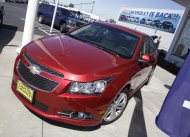
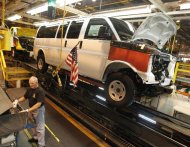
Recently on Yahoo News, the Associated Press reported record profits for General Motors.  This is just 2 years after it nearly fell apart due to financial difficulties.  General Motors went through major downsizing and had shuttered the Oldsmobile, Pontiac and Hummer makes during the past few years, closed plants, and went through a government sponsored bailout.

Per the article:


Strong sales in the U.S. and China helped the 103-year-old carmaker turn a profit of $7.6 billion, beating its old record of $6.7 billion in 1997 during the pickup truck and SUV boom.
GM is a vastly different company than it was back then. It's smaller, has less debt and its contract with the United Auto Workers is less costly. But it took a government bailout and a trip through bankruptcy protection in 2009 to cut its bloated costs. The company made record money last year even though U.S. auto sales were near historic lows at 12.8 million cars and trucks.
But problems surfaced in its 2011 results. GM lost $747 million before taxes in Europe, and its South American operations lost $122 million. Sales growth slowed in the U.S. in the fourth quarter, even as more Americans bought cars and trucks. Also, GM's fourth-quarter profit fell 8 percent and results missed Wall Street expectations.
This year, GM expects to increase its revenue as global auto sales grow and it charges more for models. However, it will make less money per vehicle as the mix of sales continues to shift to cars from trucks, which have bigger sticker prices. It also expects to invest $8 billion on new products and technology, and says pension expenses will rise. The company wants to keep expenses down by freezing its underfunded U.S. pension plan for salaried workers.  
Several Unit 2 concepts in Microeconomics are covered within this particular article and as we go through Unit 2 I would like you to add to the discussion in the comments.

Questions for Discussion:


1.  Under which of the four output market structures is the Automobile Industry?  How well does it fit the descriptions?  Consider all attributes: type of product, size of an individual firm relative to market, ease of entry/exit to the market, degree of price control an individual firm possesses, degree of non-price competition in the market.

2.  What type of costs are detailed in the news article (explicit or implicit, fixed or variable)?  Explain why these costs fit the description.

3.  What economic term could be used in the place of the phrase "money per vehicle"?  Explain why that is the appropriate term.

As always, any articles presented in the blog are NOT AVAILABLE for students to use for their semesterly article reports.

I welcome all thoughtful comments/discussion.

Success to you all!!!

Prof. Hank Lewis

Tuesday, February 14, 2012

In The News: Retail Sales/Leading Economic Indicators

This blog is more directed at my ECON 2301/Macroeconomics Students.


Just today on Yahoo News, we saw a report about Retail Sales being down.  This then led to a drop in various Stock Indices as well.
Traders work on the floor of the New York Stock ...The S&P 500 index retreated from near a seven-month high Tuesday after weaker-than-expected January U.S. retail sales data curbed investors' appetite for risky assets. U.S. retail sales rose less than expected in January as consumers cut back on car purchases and shopped less online. The disappointing data added to concerns stemming from Moody's downgrade Monday of ratings on six euro-zone countries.
"The state of the consumer is still pretty mild. We have had some good economic news but still pretty mild trends all around," said Sean Incremona, an economist at 4CAST in New York. The Dow Jones industrial average (DJI) was down 28.01 points, or 0.22 percent, at 12,846.03. The Standard &Poor's 500 Index (SPX) was down 3.97 points, or 0.29 percent, at 1,347.80. The Nasdaq Composite Index (IXIC) was down 10.23 points, or 0.35 percent, at 2,921.16. On Monday, the S&P 500 rose near a seven-month high, up more than 25 percent from a low in early October.
The benchmark index is hitting strong resistance in the 1,355-1,360 area, a possible trigger for a pullback. Pressuring the financial sector, Citigroup downgraded Bank of America Corp (BAC.N) to "neutral" from "buy," saying earnings headwinds would continue at the company even as capital concerns subside. Bank of America shares were down 1.1 percent at $8.16.
Students in Macroeconomics who've read the chapter on business cycles should recognize these stock indices and  retail sales as leading economic indicators.  These are different kinds of time series economic data whose behavior precludes the business cycle by about 6 months.  Granted these are just 2 or 3 of the whole index which includes:

     Average workweek (manufacturing)
     Initial unemployment claims (new unemployment benefits claims)
     New orders for consumer goods (durable goods)
     Vendor performance (retail sales)
     Plant and equipment orders (durable goods)
     Building permits (new housing construction)
     Change in unfilled durable orders
     Sensitive material prices (as in gold, silver and crude oil)
     Stock prices (S&P 500, DJIA, Nasdaq and other stock indices)
     Real M2
     Index of consumer expectations (a/k/a Consumer Confidence Levels)

Question for comments:  What does this news article suggest about the economy for the next few months?  In other words, what are these leading indicators predicting?

As always I welcome your comments and thoughtful discussion.

Success to you all!

Prof. Hank Lewis